Category: Nature

  • Visit a Sri Lanka Beach

    Mirissa Beach
    Nilaveli Beach
    Induruwa Beach
    Weligama Beach
    Arugam bay
    Bentota Beach
    Tangalle Beach
    Wijaya Beach
    Hiriketiya Beach
    Galle beach

    Tourists come from all over the world to explore the best beaches in Sri Lanka. The sight of these beautiful sandy beaches will tempt you to visit these beautiful beaches many times.

    Beaches are perfect places to relax with natural sound of ocean waves connecting you with mother nature. Enjoy the feeling of connection and peace whilst relaxing on the beach.

    Sri Lankan beaches are the perfect place to rejuvenate and recharge your batteries and mojo.

    Many of the best beaches in Sri Lanka are on the southwestern coast, where you can find blue waters, snorkelling, surfing, and even migrating whales.

    Sri Lanka has two seasons governed by two monsoon seasons. Sunshine and dry weather are available throughout the year in some parts of the island, but if you are planning a multi-day beach trip, the best time to visit South West Sri Lanka is from mid-November to April. For the summer season the better “beach weather” is in the East coast.

    Mirissa Beach
    Impressive, Mirissa Beach winds gently around the bay in which it is located; The beautiful palm trees that gather along the golden sand only add to its picturesque appearance. The crystal clear waters are ideal for swimming, and as there is a small coral reef offshore, it is also a great spot for snorkelling. There is also fantastic surfing at one end of the beach. Despite the unspoiled environment, there are plenty of beach bars, restaurants, and hotels for guests to choose from. these are hidden among the tree line. Although it is quite a laid back and relaxed place, there are some lively bars in the area that offer amazing views of the sun setting over the sea.

    Nilaveli Beach
    Nilaveli Beach is a wide sandy beach lined with palm trees and dotted with fishing boats. Located in the north-eastern part of Sri Lanka, it is a 30-minute drive from the city of Trincomalee. This small island has calm beaches with gentle waves due to its small reef. Although Nilaveli Beach is large, it is popular with both locals and tourists. There are lifeguards on duty and many small restaurants on the beach, most specializing in seafood. The Trincomalee area is also good for sightseeing as it is a center of Tamil culture. Tamil is the name of the language spoken in Sri Lanka and of the ethnic group to which the majority of its inhabitants belong. If Nilaveli’s seclusion isn’t enough, you can take a boat to Pigeon Island National Park, about half a mile offshore.

    Induruwa Beach
    The idyllic and peaceful beach of Induruwa is the perfect place to relax after exploring the culture, wildlife and highlands of Sri Lanka. Less than two hours from Colombo, Induruwa Beach offers golden sands fringed with turquoise waves on one side and emerald green foliage and stacked rocks on the other. It is one of the quietest and cleanest beaches on the south west coast, with good restaurants and traditional market stalls. Induruwa is also a great place to explore the nearby lagoons and lakes, as well as the excellent Yagirala Rain Forest with its lush green landscape and ample bird-watching opportunities.

    Weligama Beach
    Sheltered by a bay of the same name, Weligama Beach looks stunning with its bright golden sands and is one of the best spots on the south coast. Just beyond the tree line, which preserves pristine views of the beach, are a variety of restaurants and hotels. With many people fishing for a living here, there is plenty of fresh and delicious seafood to eat. The waters of the bay are excellent for swimming and snorkeling; There is a small reef that you can explore. As there are some breakers and waves, it is also a popular spot for those who want to learn to surf.

    Arugam bay
    If you like surfing, there is no better place in Sri Lanka than Arugam Bay. Large waves constantly break on the beautiful palm-fringed beaches that stretch along most of the surrounding coastline. Despite being an increasingly popular tourist destination, Arugam Bay is still very undeveloped, so you won’t find many large hotels or resorts. This is partly what makes it so attractive; The local charm still shines through in its small cafes, restaurants and huts. Here you can not only enjoy the beautiful beaches, but also many activities. Whether you’re touring the picturesque Pottuvil Lagoon, enjoying the sunset at Elephant Rock or going on safari in Yala National Park and seeing real elephants, Arugam Bay has it all.

    Bentota Beach
    Beautiful and relatively quiet, Bentota Beach is just a few hours’ drive from Colombo on Sri Lanka’s west coast and is a great choice for both adventure and relaxation. For water sports enthusiasts, Bentota Lagoon offers a tranquil haven for kayaking and paddling, and the calm ocean is perfect for sailing, deep-sea fishing, scuba diving and snorkeling. On the other hand, Bentota is also known for its excellent offer of Ayurveda centers and luxury spas that offer relaxation for those seeking relaxation. This stunning stretch of coastline also offers stylish accommodation and a range of recommended restaurants and bars.

    Tangalle Beach
    Much quieter and more relaxed than many of the other beaches on Sri Lanka’s south coast, Tangalle Beach stretches seemingly endlessly. The soft sand and spectacular scenery are perfect for long walks while the Indian Ocean gently laps the shore. With many fantastic restaurants, bars and hotels dotted around, Tangalle has everything you could wish for in a holiday destination. It is growing in popularity each year, with many visitors opting to snorkel the nearby coral reefs. Apart from the enchanting appearance of Tangalle Beach, it is also close to some attractions worth visiting, such as the Mulkirigala Cave Temple and the beautiful scenery of Rekawa Lagoon.

    Wijaya Beach
    Wijaya Beach is located in Dalawella, 7 km south of Galle, in the southern province of Sri Lanka. Wijaya Beach is a family business. Since we opened our restaurant in 1980, we have become one of the most popular places to eat in the area. We pride ourselves on our popularity with the local expat community and the number of visitors who return year after year to enjoy our food, cocktails, beautiful beach and relaxed atmosphere. Our beachfront restaurant and bar serves an eclectic mix of Asian and European cuisine and we have a luxurious eight room bed and breakfast nestled around the courtyard behind the restaurant.

    Hiriketiya Beach
    Hiriketiya Beach, also known as Hiri Beach, is becoming more and more famous for its waves. Some say it is fast becoming Sri Lanka’s surf paradise! Surrounded by a dense palm forest and close to trendy restaurants where you can enjoy a delicious brunch, it’s easy to see why Horseshoe Bay is so popular. Surfers from all over the world are drawn to this spot, bringing with them a bohemian, surfer vibe that can be seen throughout Hiriketiya. Although the water is full, there is still room to swim or watch the surfers catch the best wave of the day from the comfort of the shore. The best way to do this is to rent a board and get involved by taking a lesson at one of the surf schools on the beach.

    Galle beach
    Galle beach is a small beach at the end of the promenade, below the famous lighthouse. There are mainly local people from the town but respectful foreigners can enjoy swimming here. As it is not a “tourist beach” so don’t show too much skin and being conservative. If you’re in a bikini, you might get awkward looks. It’s a beautiful beach and the sea is lovely and warm – it felt great to take a dip after a hot walk around the city.
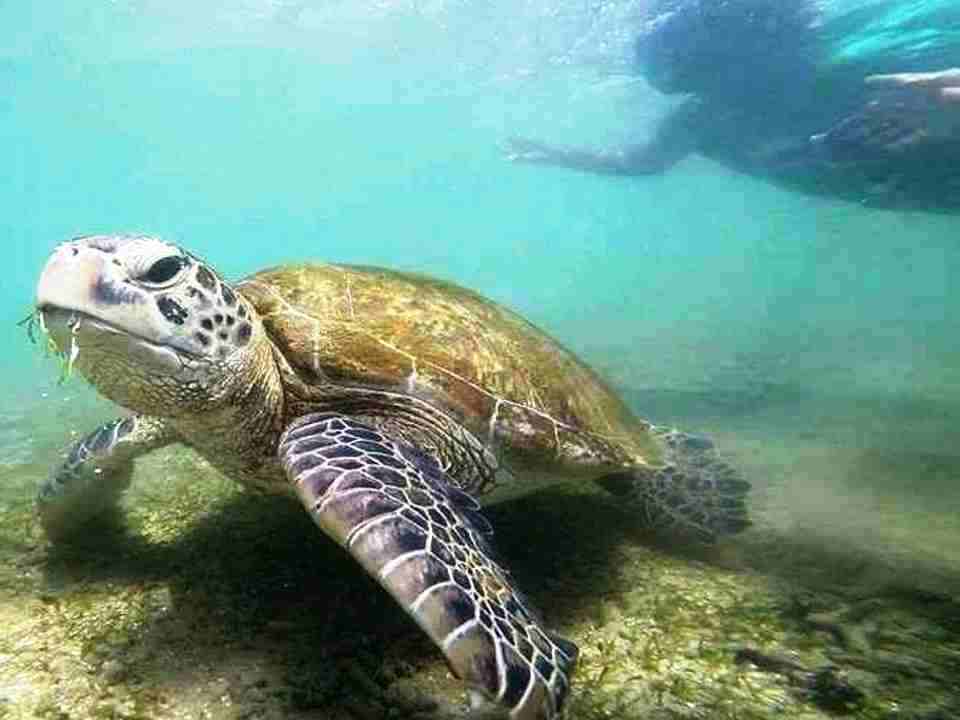
  • Snorkel Safari Adventures Come Snorkelling Sri Lanka Style Madiha Polhena South Coast

    Snorkel Safari Adventures Come Snorkelling Sri Lanka Style Madiha Polhena South Coast

    Explore the underwater beauty in the tropical lagoons between Polhena and Madiha coral reefs and the secluded beaches on the South Coast of Sri Lanka.

    Admire the colour fish, the octopus and the turtles as you glide on the surface looking at the beauty on the sea bed.


    Snorkel Safari Adventures Come Snorkelling Sri Lanka Style Madiha Polhena South Coast


    Snorkel Safari Adventures Come Snorkelling Sri Lanka Style Madiha Polhena South Coast

  • Ayurvedic Medicine Holy Tulsi Health Benefits

    Ayurvedic Medicine Holy Tulsi Health Benefits

    Ayurvedic Properties of Tulsi Leaves

    The holy Tulsi or basil leaves is an acclaimed herb in almost every Indian household for the past 5000 years. Known for its holiness, it is treated the ‘queen of herbs’. It is also very well known for its medicinal properties and is the base to almost every Ayurvedic medicine.

    sri lanka island tours tulsi health ayuvedic (1)

    Why these Basil Leaves are so special?

    We now know that Tulsi leaves are a gift explored and passed over to us by our ancient seers. But, what did they explore and what makes these leaves to be termed the queen, let’s read:

    sri lanka island tours tulsi health ayuvedic (1)

    • The best germicidal agent: When you have a cold or cough, try boiling a few Tulsi leaves with plain water. Extracting the decoction or filtering out the leaves and drinking down the water will bring great relief to your cold and cough irritation sooner than you expected. It will also soothe your infected respiratory tract. Now, don’t throw out the filtered out leaves, you can very much munch them for more beneficial results.
    • sri lanka island tours tulsi health ayuvedic (1)
    • An excellent anti-inflammatory solution: When you are suffering of flu or fever, there could be nothing more than Tulsi that can act against the influencing virus. For acute fevers, make a decoction out of boiled Tulsi leaves and half a teaspoon of cardamom powder + half a teaspoon of sugar. Use this as syrup to treat your fever and be cured of fever instantly.
    • Known for its strengthening capacity: In case you or your close ones are suffering from renal stones, then go to Tulsi for help. Make a juice out of Tulsi leaves, stir in a teaspoon of honey and drink up this juice on an empty stomach in the early morning to find wonderful results.

    sri lanka island tours tulsi health ayuvedic (1)

    • Best immunity booster: If pollution takes a toll on your health, Tulsi is the go-to agent to boost your immunity against these harmful environmental agents. Pluck a few Tulsi leaves, rinse them well and chew these leaves to boost your body’s immunity power.
    • Expert cholesterol controller: Tulsi is the best cholesterol regulator. If you keep munching on Tulsi leaves, it will streamline your blood for its cholesterol levels and keep your blood cholesterol levels maintained. It contains Vitamin C and Eugenol as additional features, which have a splendid effect on cholesterol levels.

    sri lanka island tours tulsi health ayuvedic (1)

    • The best solution for diabetes: If you have been fighting with high and uncontrollable diabetes counts, then Tulsi will spare you off the stress. Keep munching on fresh Tulsi leaves to keep your blood sugar levels under control.

    sri lanka island tours tulsi health ayuvedic (1)

    • A one stop solution for beauty woes: There are many beauty complaints for the youth-pimples and acnes, dry or oily scalp, white heads or black heads, large pores on the skin, loosened skin which needs tightening and so on. Tulsi is just the solution you have to go for. Making a pack out of Tulsi for your hair and skin related problems; applying the same and leaving it on for 15-20 minutes and then rinsing it off will provide a solution to your beauty woes.
    • Infection fighting master: No matter what kind of infection you are suffering from, treat it with Tulsi. Drink down the Tulsi extract and be surprised to find that your infection has gone away at once!

    sri lanka island tours tulsi health ayuvedic (1)

    • A good laxative: If you have been suffering from stomach infections, digestion problems and constipation, try drinking Tulsi juice on an empty stomach. You will be amazed at the miracle.
    • The best pain reliever: If you have been suffering from tooth pain/rheumatism, then treat it with a pack of Tulsi leaves to get relieved of pain instantly.

    sri lanka island tours tulsi health ayuvedic (1)

    • Expert detoxifier: Smokers and drinkers who have recouped themselves from these bad habits and are looking for detoxifying their lungs from all those accumulated pollutants, then Tulsi is the best solution for this as well. Munching on Tulsi leaves will extract all the poison away from you.

    sri lanka island tours tulsi health ayuvedic (1)

    • Promotes quick healing: If you have been suffering of an unhealable infection, then trust on Tulsi. Just munching on fresh leaves and taking in Tulsi extracts can do the wonder to your problems.
    • Treats cuts and wounds expertly: If you have had a recent cut or wound, apply some Tulsi pack over the affected area. Tulsi will fight those infections and drive away the pain instantly. You will be healed very soon with its miracle.

    With all these pronounced professional qualities, now we know why it is the one-stop-solution for health problems. Try planting Tulsi leaves in your balcony or backyard-it not only brings benefits to your health, but also brings in positive vibrations to your living space because it is that holy!!

    Probably that is why our grandmothers and moms worshipped the plant so very much. Even though we don’t get the real time for this plant’s worship, let us be a part of its medicinal worship-join the Tulsi revolution and spread the word of goodness to the world around you!

  • Blue Whales of Sri Lanka

    Blue Whales of Sri Lanka

    The Unorthodox Blue Whales of Sri Lanka

    It’s no secret that at 100 feet long, blue whales are the largest living animal on Earth. A blue whale can be the size of a passenger plane, or the size of three school buses, with a heart the size of a car, and a tongue that weighs as much as an elephant. Despite all we know about their incredible size, these undersea giants still have secrets to hide. That’s why Dr. Asha de Vos has dedicated her life to studying the mysteries of the blue whale.


    Dr. Asha de Vos, Photo: Yasha Hetzel

    Asha’s experience with blue whales started in 2003, when she was on a research vessel tracking sperm whales near Sri Lanka. The ship was using underwater microphones (called hydrophones) to locate their targets while Asha was on deck standing lookout on a clear, calm day. Suddenly, a tall spout broke the surface of the ocean, reaching high up, up into the sky. The enormous spout could only come from one animal: a blue whale.

    That one blue whale turned out to be two and as Asha and the ship followed them, they found something that would change the course of her whole career. They came across bright red neon nuggets of whale poop.

    It’s easy to laugh at this discovery, but the poop revealed a clue about the nature of these blue whales. Blue whales typically feed in colder waters and migrate to warm waters to breed and calve. It doesn’t get much warmer than Sri Lanka, a tropical country five degrees above the equator. The poop was a sign that these whales were actually feeding in warm waters.

    This breakthrough launched a path for Asha’s pioneering work with the “unorthodox blue whales” of Sri Lanka. They were behaving in a way that no other blue whales do, because they are the only population of blue whales in the world that do not migrate. The uniquely enclosed ocean basin of Sri Lanka and monsoon weather can be remarkably productive for plant and animal life so they have no need to migrate.

    Threats to Blue Whales
    Whales in the northern Indian Ocean have never had to face the threats of whaling except for a time in the 1960s when Soviets hunted about 1,300 blue whales. Today, the threat of whaling is all but obsolete, leaving ship strikes as the biggest threat to blue whales here.

    The south coast of Sri Lanka has one of the busiest shipping lanes in the entire world. Everything that travels between Singapore and Dubai, two of the biggest ports in the world, go through this area. Ship traffic has actually quadrupled in this part of the ocean in the past century.

    The blue whales in these waters are caught in the crossfire, their ranges overlapping with the modern shipping lanes. Even with their massive size, the whales can’t compete with the force of a speeding container ship, their broken bodies coming into port wrapped around the bow or floating in the ocean with enormous gashes.

    Something must be done to separate the ships from the whales. Using science, it shows that ninety percent of ships aren’t coming into Sri Lankan ports. By shifting shipping lanes 15 nautical miles off shore, it would be possible to avoid the places where whales breed, calve, and feed. The remaining ten percent of ships that do enter the country could do much less lethal damage if they would at least slow down in the areas where whales are found.

    Blue Whales’ Vital Role
    Blue whales are iconic and beloved, but they also have a vital role as ecosystem engineers. These 300,000 pound animals dive deep into the ocean, consuming iron and nitrogen that can’t be found on the surface and bringing it back to the top when they breathe. As they do, they release enormous fecal plumes full of nutrients—the ocean’s fertilizer. The phytoplankton (tiny forms of plant life) released in these plumes are the foundation for of the marine food chain and also release oxygen into the environment for the whole planet.

    When they die, blue whales’ bodies provide food for scavengers and as they sink to the ocean floor, they remove carbon from the atmosphere. Blue whales remove 190,000 tons of carbon a year from the surface of the atmosphere, bringing it to the ocean depth and delaying the effects of global warming.

    Creating Opportunity for Marine Conservation
    Sri Lanka is rich in biodiversity but less than 1% of their oceans have been protected. The country has been listed as one of the forty worst funded countries for conservation. The country struggles with meeting the challenges faced by the marine ecosystem.

    Part of the problem is that marine biologists in Sri Lanka lack opportunity, which is why Asha established Oceanswell. Oceanswell is the first marine conservation research and education organization in Sri Lanka; the organization hopes to answer the growing need for marine conservation in the region using homegrown talent to address local issues and create conservation solutions.

    Seventy percent of the planet is ocean yet there’s a disproportionate amount of conservationists working to save it. Asha believes that if we really want to make a difference, we will need custodians on every coastline who can empower,  engage, and enable people to care about and protect our oceans.

    We believe in Oceanswell’s mission to create the next generation of marine conservationists who will show everyone the magic of the world’s oceans.

    Check out Dr. Asha De Vos’ presentation from the 2017 Fall Wildlife Conservation Expo

    TO SUPPORT OCEANSWELL

error: Content is protected !!